
Human-in-the-Loop AI, often shortened to HITL, refers to AI systems that intentionally include human input at key stages of development and operation. Instead of allowing models to learn and act entirely on their own, humans are involved in data preparation, labeling, review, validation, and continuous improvement. HITL ensures that AI systems learn from accurate, context-aware, and ethically reviewed data.
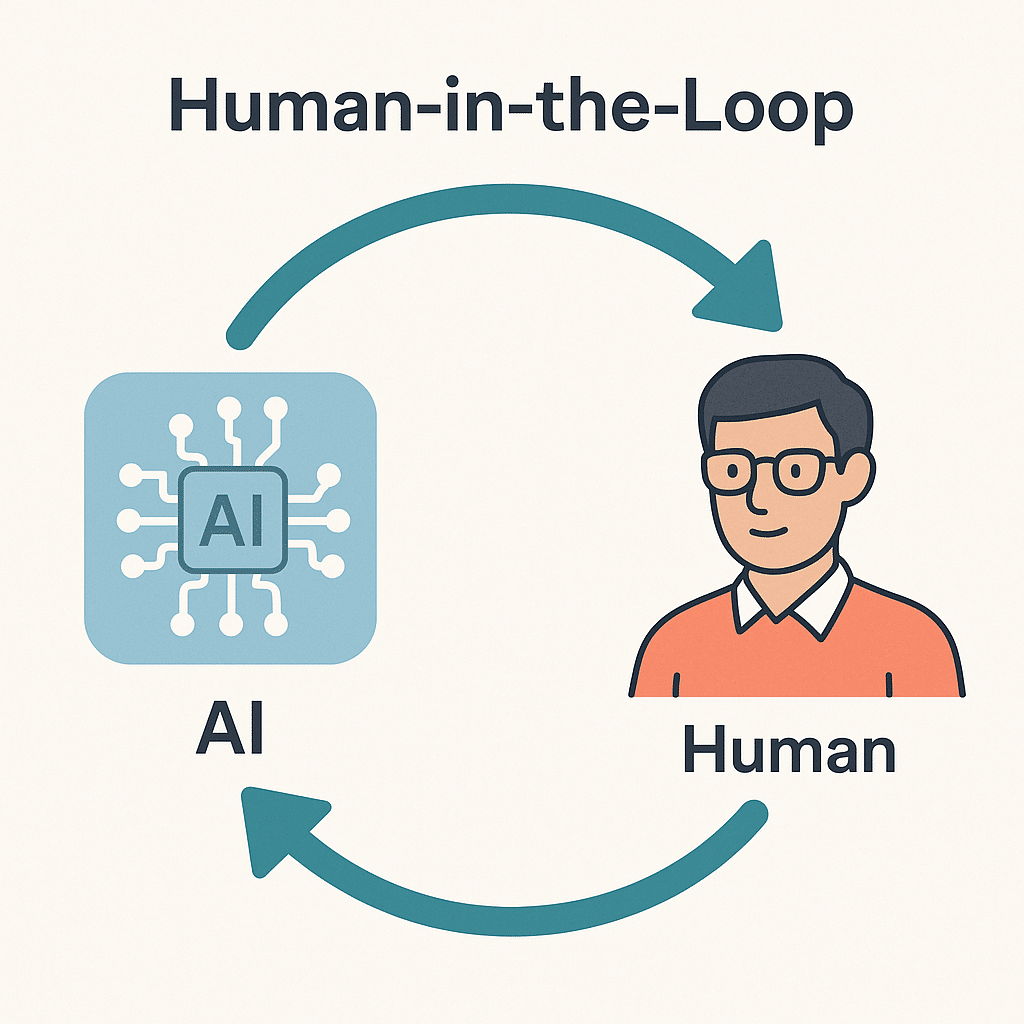
In real-world AI projects, machines are excellent at processing large volumes of data quickly, but they struggle with context, ambiguity, cultural nuance, and edge cases. Humans bring reasoning, judgment, and local understanding that machines cannot fully replicate. For example, an AI model trained to recognize road traffic scenes in Lagos must understand informal transport systems, street vendors, and unique road behavior patterns that differ from European or North American cities.
HITL is not a sign of weak AI. Instead, it is a design choice that improves quality, safety, and trust. Most production AI systems today use HITL workflows because fully automated AI often fails in complex, real-world environments.
HITL can happen at different stages:
- During data annotation where humans label text, images, audio, or video.
- During quality assurance where reviewers validate or correct annotations.
- During model evaluation where humans assess AI outputs.
- During deployment where humans intervene when models make uncertain decisions.