
Humans are not just “labelers”; they are the architects of AI intelligence. Humans play multiple roles throughout the AI lifecycle, not just at the annotation stage. Understanding these roles helps annotators and QA specialists see how their work fits into the larger system.
Before an AI model is trained, humans decide what data is collected, which categories are relevant, and how labeling guidelines are written. During annotation, humans apply these guidelines to real data, often making judgment calls when data does not perfectly fit predefined rules. After annotation, QA specialists review the work to ensure consistency and accuracy.
Humans also play a critical role in feedback loops. When a model makes mistakes, humans identify these errors, correct them, and feed improved data back into the system. This cycle helps the model improve over time.
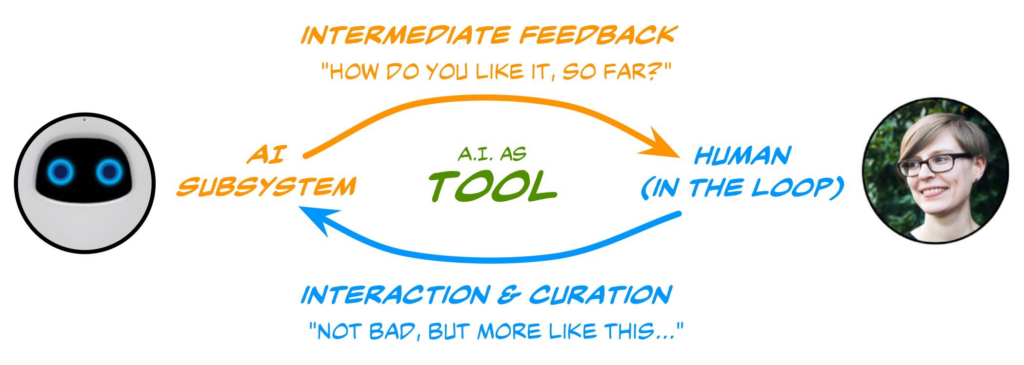
Key Roles in the AI Development Lifecycle:
- Data Preparation & Annotation: This is where most annotators begin. You label raw data (images, text, audio) to create the “ground truth” examples the AI learns from. For example, drawing bounding boxes around matatus (minibuses) in Nairobi traffic footage.
- Model Training & Evaluation: Team leads and QA specialists often review the AI’s first outputs. You analyze where the model is failing. Is it confusing bicycles with motorbikes in Lagos traffic scenes? Your insights guide data scientists to collect more specific training data.
- Handling Edge Cases & Ambiguity: AI struggles with rare or complex scenarios. A human must resolve these. For instance, an AI for moderating social media content might flag a popular West African proverb as potentially harmful because it contains strong language. A human with cultural understanding can correctly override this, teaching the AI about context.
- Ongoing Monitoring & Feedback: After an AI is deployed, its performance must be monitored. Annotators and QA specialists review its real-world predictions, correct errors, and ensure it adapts to new trends, like new slang in African online markets.