

🔰 Course Introduction
Accurate, high-quality data is the foundation of every AI system in the world—from computer vision models used in agriculture to chatbots used by banks and healthcare applications powered by natural language processing. This course is designed to equip absolute beginners with the practical skills and hands-on experience needed to become professional data annotators in Africa’s fast-growing AI ecosystem.
Learners will gain foundational knowledge of AI, explore the key concepts behind machine learning, and master the core annotation skills used by global AI companies. The course focuses on real African datasets such as local languages, satellite imagery, regional traffic scenes, cultural nuances to prepare learners for real-world annotation jobs with DataLens Africa and other AI organizations.
This is the ideal starting point for anyone looking to begin a career in AI Data Work, even with no prior technical experience.
Difficulty Level: Beginner Level — Designed for entry-level data workers
Course Goal: Equip learners with practical skills to annotate images, text, audio, video, and geospatial data using industry-standard tools while understanding how annotated data powers AI/ML models.
Target Audience: New data annotators, fresh graduates, or professionals pivoting into AI data labeling roles.
Learning Outcomes:
- Complete a real-world multimodal annotation project professionally.
- Perform image, text, audio, video, and geospatial annotation using standard tools.
- Apply annotation guidelines and quality principles to produce accurate datasets.
- Identify and reduce annotation errors, inconsistencies, and biases.
📅 Mandatory Hands-On Lab (Pre-Recorded)
To transform your theoretical knowledge into practical, job-ready skills, this course includes a mandatory hands-on lab webinar that has been pre-recorded and embedded directly into the course content.
The lab simulates real professional annotation tasks under expert guidance. You will work with industry-standard tools, annotate authentic datasets, and observe best practices used in real AI projects — all at your own pace.
How the Hands-On Lab Works:
- Fully Self-Paced: The lab webinar is pre-recorded and available inside the course. You can watch and complete it anytime.
- No Registration Required: There is no need to sign up for a live session or wait for a scheduled cohort.
- Learn by Doing: Follow along with the guided exercises and complete the practical annotation activities demonstrated in the lab.
- Flexible Learning: Pause, rewind, and revisit any section to reinforce your understanding.
To complete the course successfully, learners must watch the full hands-on lab webinar and complete all associated exercises.
🥇🏆 Completion Certificate
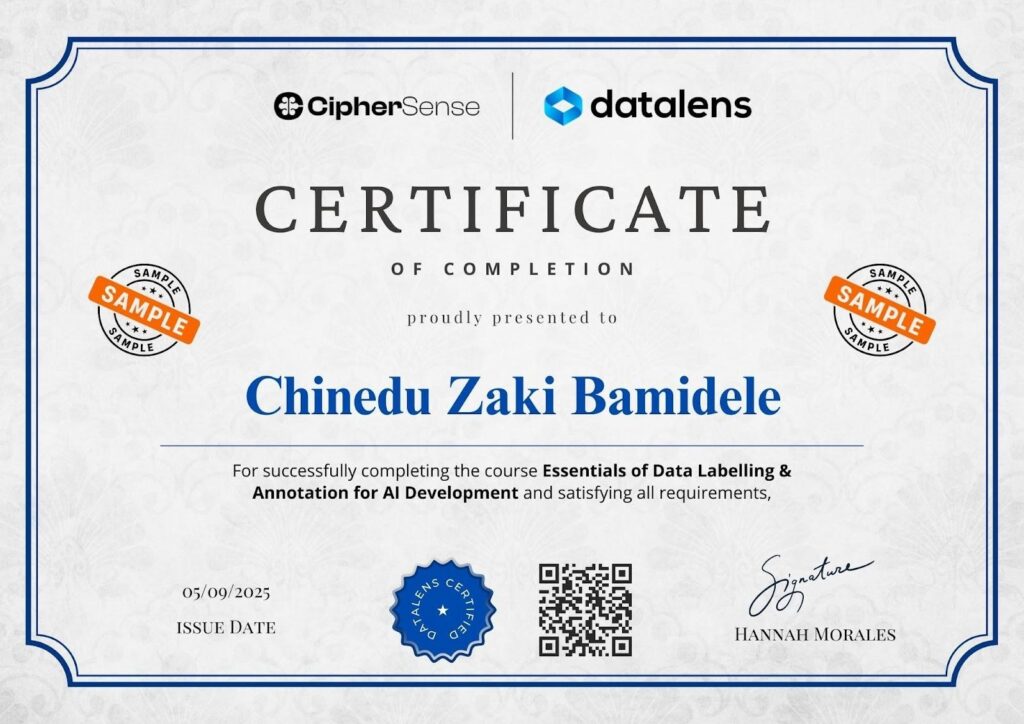
Upon successful completion of both the online course content and the Hands-On Lab webinar, you will be issued a Certificate of Completion.
Certificate Requirements:
- Complete all course modules and knowledge check quizzes.
- Watch the full pre-recorded hands-on lab webinar.
- Complete all practical lab exercises included in the course.
Certificate Issuance:
- Certificates are issued automatically and instantly once all course requirements are completed.
- Your digital certificate will be available immediately from your course dashboard.
- The certificate can be downloaded, shared on professional platforms such as LinkedIn, and used to showcase your AI data annotation skills.
Learners are encouraged to share their achievement on LinkedIn by following and tagging DataLens Africa and using the hashtag #DataLensCertified to celebrate becoming a certified data annotation professional.
⭐ Join the Community
Your learning journey doesn’t end when the course is complete. Stay connected with fellow learners, mentors, and professionals by joining our official program community on Discord.
This is the central hub where aspiring and professional data annotators across Africa connect, collaborate, and grow together.
Why Join the Community?
- 🤝 Network with Fellow Learners
- 💼 Job & Project Opportunities
- 🧠 Continuous Learning & Skill Development
- 🛠 Get Support Faster
- 📢 Announcements & Updates
👉 Click here to join our Discord community.
Need Help?
- Technical Issues?
If you encounter any technical difficulties during while taking this course or during registration for the hands-on lab, please submit a support ticket here. Include the course name, screenshots, and detailed description of the issue.